EarthDefine Tree Map
Nationwide at 60cm. Maps woody vegetation. Available off-the-shelf.
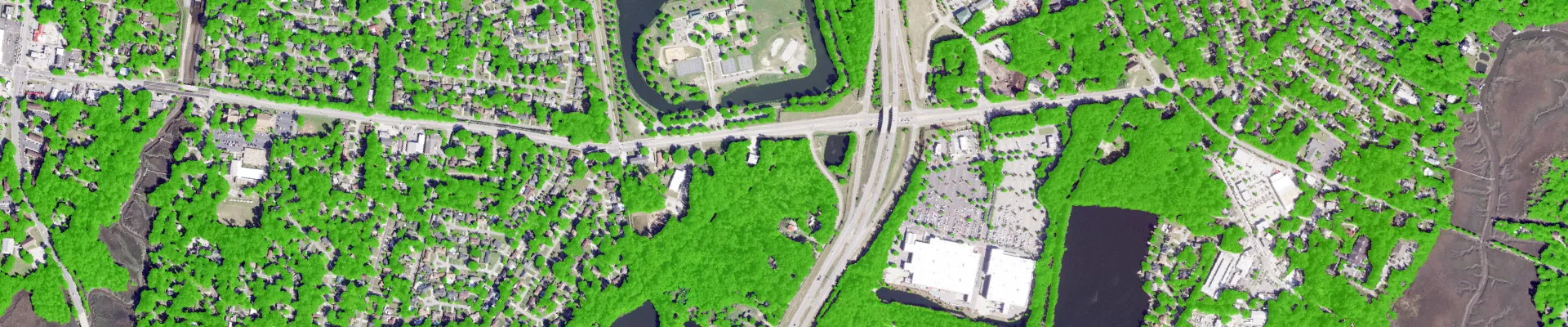
EarthDefine's Tree Map is the most detailed and up-to-date tree-cover dataset for the United States. It maps the presence or absence of trees at 60cm resolution, capturing individual trees and small gaps in the canopy. Tree Map receives quarterly releases with model improvements and newly available source data. Imagery refreshes capture changes such as deforestation, urbanisation, land-use change, and natural disasters. New imagery reaches about half the states each year, and the full national dataset is refreshed every two years.

Asheville, NC · NAIP imagery

EarthDefine Tree Map
We have leveraged advances in computer vision and AI to solve geospatial classification challenges, deploying a proprietary tree classification model on hundreds of terabytes of summer leaf-on imagery every year to create and update the Tree Map.
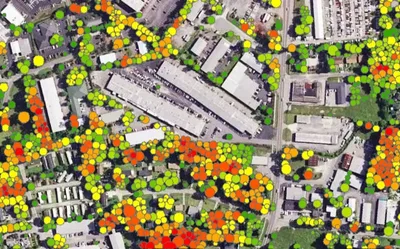
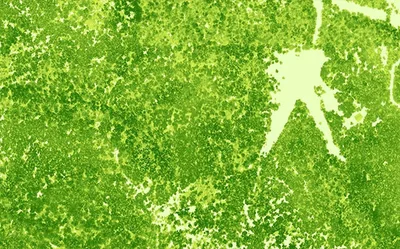
The National Land Cover Database (NLCD) tree-canopy layer provides nationwide estimates, but at 30-metre resolution it is not suited to analyses that need fine spatial detail. Tree Map classifies canopy at 2,500 times the spatial resolution, capturing even small individual trees and accurately mapping the edges of forest patches. "Quarterly releases bring model improvements and any new imagery, which reaches about half the states each year.
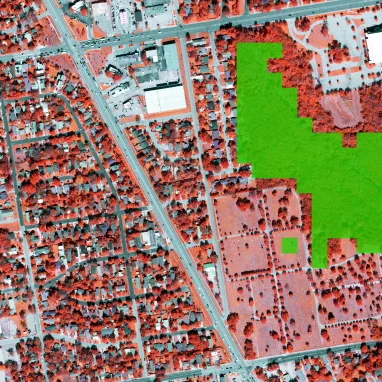
NLCD · 30m tree canopy · Misses all medium to small tree clusters
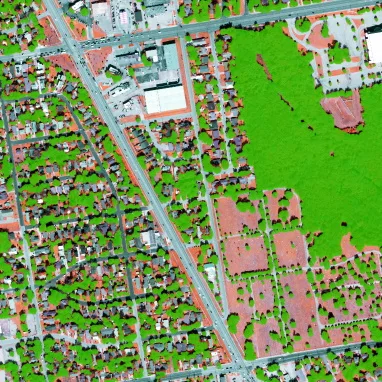
EarthDefine · 1m tree canopy · Captures every tree cluster and even small trees
Tree Map has an overall accuracy of 96.6%, rising to 97.3% in census-defined urban areas. Accuracy was assessed using 48,000 random points (1,000 per state).
EarthDefine has partnered with PlanIT Geo to deliver pre-analysed tree-cover data so you can plan and manage your urban forest with ease. The TreePlotter Canopy solution lets users jump straight into analysis without specialised GIS staff or software, with tree-equity scores, ecosystem benefits, and interactive maps for community engagement.
The Tree Map AI model can map tree canopy from aerial imagery of previous years. For most of the US we have historical imagery back to 2005, so multiple snapshots of tree cover can be derived for change analysis.
High-resolution tree-canopy data supports a wide range of mapping and analytical applications, including:
Quarterly releases bring model improvements and any newly available imagery. New imagery reaches about half the states each year, and the full national dataset is refreshed every two years.
Need more frequent updates? Ask about satellite updates for your area.
Download the datasheet, or grab a free sample for any of 49 US cities.
A 60cm raster of tree-canopy presence and absence.
96.6% overall accuracy, up to 2,500x finer than the NLCD tree-canopy layer.
Urban tree-canopy (UTC) assessments, wildfire defensible-space analysis, carbon storage and sequestration, and utility vegetation risk.
Quarterly releases bring model improvements and any newly available imagery. New imagery reaches about half the states each year, and the full national dataset is refreshed every two years, so a quarterly release does not mean every location gets new imagery that quarter.
Yes. For smaller areas, such as cities, we can update Tree Map annually or every six months using commercial satellite imagery. Larger areas, such as counties, may also be feasible depending on budget. Satellite imagery and processing involve additional costs beyond standard licensing. We can also use customer-provided imagery, subject to compatibility testing. Contact us for pricing and availability.
Pricing is per project, with a $1,000 minimum order. Delivery takes 2–5 business days for any area. Send us your area of interest for a quote.
Talk to our team about Tree Map coverage for your region, or download a free sample to evaluate the data yourself.