How National Distributors Decide Where to Build Next
Sep 3, 2026
Where a distribution center goes matters. See how nationwide building, land cover, and parking data help distributors identify the right sites faster.
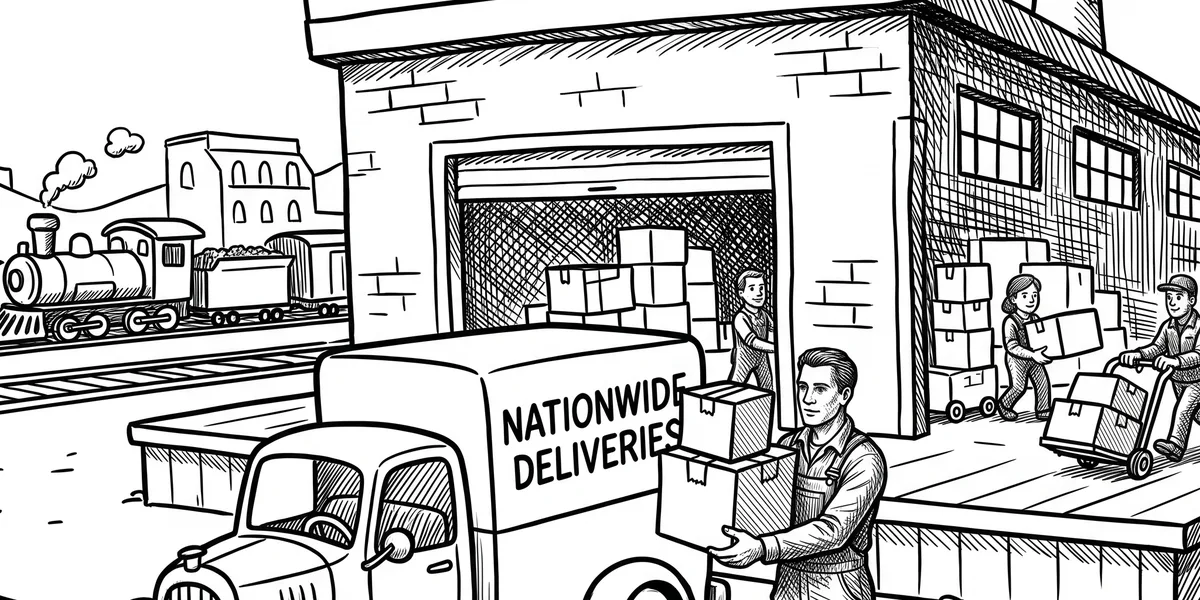
Facility placement is a speed problem before it's a real estate problem. Get a distribution network's geography wrong, and no amount of warehouse automation fixes the extra day it takes a truck to reach a customer three states away.
Why Site Selection Matters
For a company running dozens of distribution centers and hundreds of branches, where a building sits determines what a customer actually experiences: an order that arrives next-day instead of two days late, a delivery route that runs efficiently instead of wastefully, or a new metro area that gets served well instead of left thin. Ferguson, the building-products distributor, put it plainly when announcing a new Ohio facility: "Our distribution centers are the heart of our supply chain," said Al Byrd, the company's senior vice president of supply chain. The site itself shows the logic in practice: a 400,000-square-foot distribution center on a 77-acre site in Celina, Ohio, chosen specifically for its proximity to Ferguson's other Midwest locations, letting the company reach customers even next-day.
None of those decisions get made on a hunch. They get made by comparing dozens or hundreds of candidate sites against the same set of questions: how big is the available parcel, what's already built on it, how close is it to the customers and suppliers that matter, and how much room is there to expand later.
The Evaluation Process
Answering those questions at the scale a national network operates at means working from data that covers the whole country consistently, not a patchwork of local surveys pulled together site by site. A network strategy team comparing a candidate site in Texas against one in Oregon needs both evaluated the same way, on the same resolution, updated on the same schedule, or the comparison isn't really apples to apples.
If you're evaluating a single site, this is easier than it sounds. You commission a survey, you walk the property, you make the call. The moment you're comparing that site against dozens of others in different states, the math changes. You can't schedule a site visit for every candidate before a quarterly planning deadline, and you can't trust a different local vendor in each state to have measured a parking lot or a floodplain the same way. What you need instead is one dataset, built the same way everywhere, so a site in Ohio and a site in Texas are actually being judged on the same terms.
That's where building footprint and land cover data earn their keep. Knowing the precise footprint, height, and layout of what's already built on a parcel tells a site-selection team how much of a lot is usable before they ever schedule a site visit. Land cover data shows what's actually on the ground around a candidate site, pavement, vegetation, open land, which shapes both site readiness and how much future expansion room realistically exists. And because a distribution center's footprint typically includes acres of parking and staging area, parking and lot data matter just as much as the building itself when comparing candidate sites for truck court capacity and dock access.
What the Data Needs to Deliver
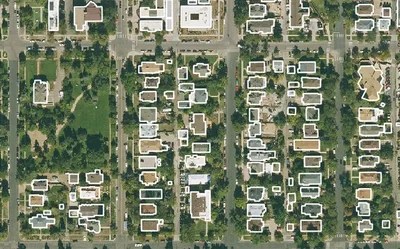
EarthDefine's Building Footprints 3D dataset covers over 183 million commercial and residential structures across the continental United States, derived from LiDAR and 60-centimeter-resolution aerial imagery, precise enough to distinguish a building from the trees around it. Land Cover and Impervious datasets classify what's on the ground at the same resolution, and Parking lot data maps and staging capacity directly. All three are built to be compared consistently, market to market, which makes a nationwide site-selection process comparable rather than relying on region-specific data.
Good data narrows a long list of candidates down to the handful worth that kind of scrutiny; it doesn't replace the scrutiny itself.
Request a free sample or get in touch with our team.
Related products
Building Footprints 3D
202M+ buildings mapped, with heights and elevations. Available off-the-shelf.
Learn more
Land Cover
Seven ground-cover classes at 30cm or 60cm resolution, produced on demand for your area of interest across the United States.
Learn more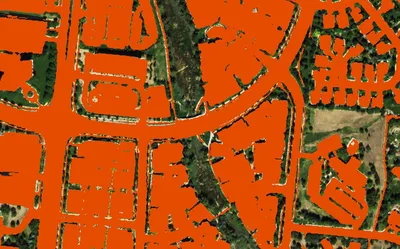
Impervious Map
Nationwide at 60cm. All impervious surfaces. Produced to order using the latest available imagery.
Learn more