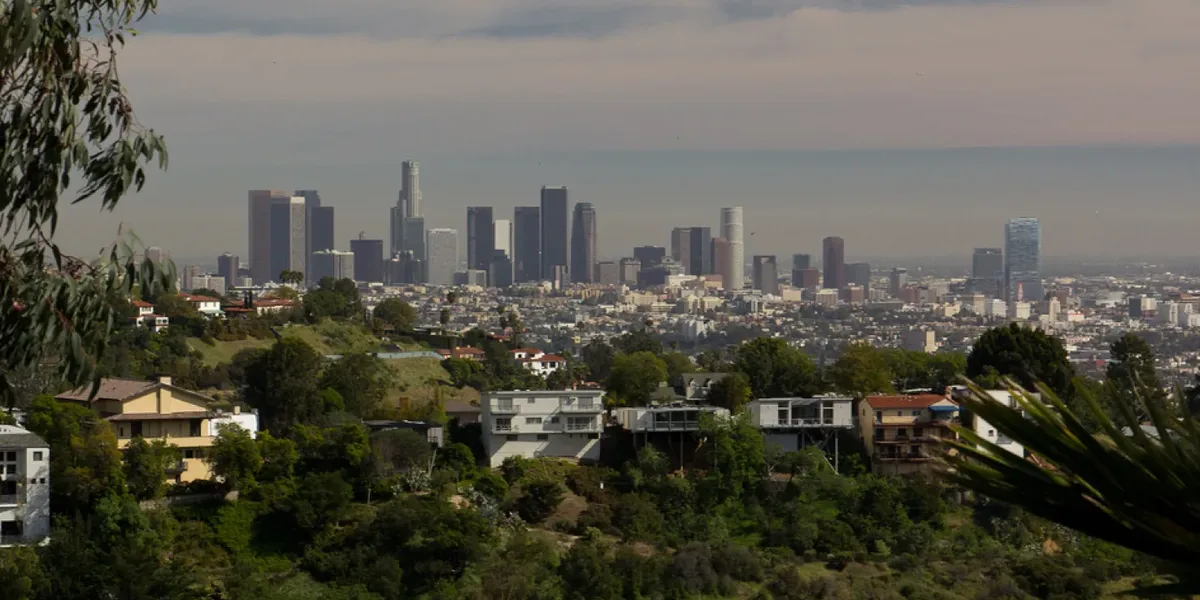
Examining environmental justice in urban forest management and decision-making
Oct 25, 2023
This dissertation explores environmental justice in US urban forestry, revealing how management plans and city foresters often overlook equity and recognitional justice for marginalized groups.
ResearchGate
The inequitable distribution of urban trees, their socio-ecological benefits, and community engagement in local tree-planting initiatives is considered environmentally unjust. Environmental injustices occur when marginalized groups are disproportionately burdened by environmental risks, lack access to environmental goods, and/or are inequitably engaged in decision-making. These injustices often stem from discriminatory policies and practices and are compounded by systemic racism embedded within decision-making systems. While there is growing consensus on the importance of justice in environmental management, specific knowledge concerning the development and implementation of justice-oriented policies and practices remains limited, particularly in urban forestry. The tripartite environmental justice framework – encompassing distributional, procedural, and recognitional justice – is useful for investigating how inequities manifest for disadvantaged groups. Recognitional justice remains understudied and undervalued, especially within urban forestry. This manuscript-style dissertation addresses these gaps. Chapter Two investigates 107 urban forest management plans (UFMPs) from United States municipalities to analyze their reference to environmental justice. Findings reveal that environmental justice themes are often peripheral in UFMPs, and that recognitional justice principles are notably absent from most documents. Chapter Three examines how urban foresters enable or constrain environmental justice in urban forest planning in San Francisco, California and Seattle, Washington. Interviews revealed San Francisco’s prioritization of distributional justice and Seattle’s focus on procedural and recognitional justice. San Francisco’s Proposition E and Seattle’s Race and Social Justice Initiative play key roles in addressing urban forest planning inequities. Chapter Four explores the perspectives and practices of community-based urban forest stewards in Philadelphia, Pennsylvania. Using ethnography and interviews, this research investigates how these stewards address distributional, procedural, and recognitional injustices in urban forest planning while examining the socio-political factors shaping their practices. The findings illuminate participation barriers, including past discriminatory planning practices, gentrification concerns, and underrepresentation in decision-making. Yet, stewards remain invested in addressing environmental injustices and emphasize the importance of recognitional justice. Collectively, these three studies underscore the importance of recognizing disadvantaged/neglected groups within community engagement for equitable urban forest planning. This dissertation aims to enhance knowledge concerning environmental justice in US urban forest management and contribute recommendations for urban foresters to develop justice-oriented policies and practices.
Related products
Tree Locations
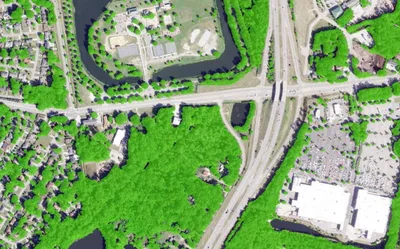
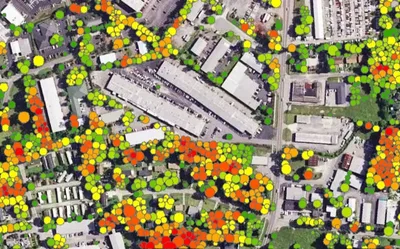
Points, polygons and heights for individual trees, produced to order using the latest available imagery.
Learn more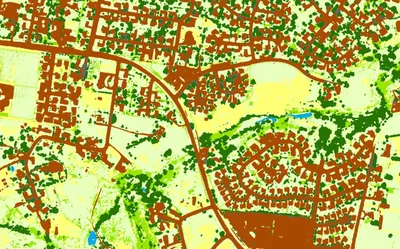
Land Cover
Seven ground-cover classes at 30cm or 60cm resolution, produced on demand for your area of interest across the United States.
Learn more